
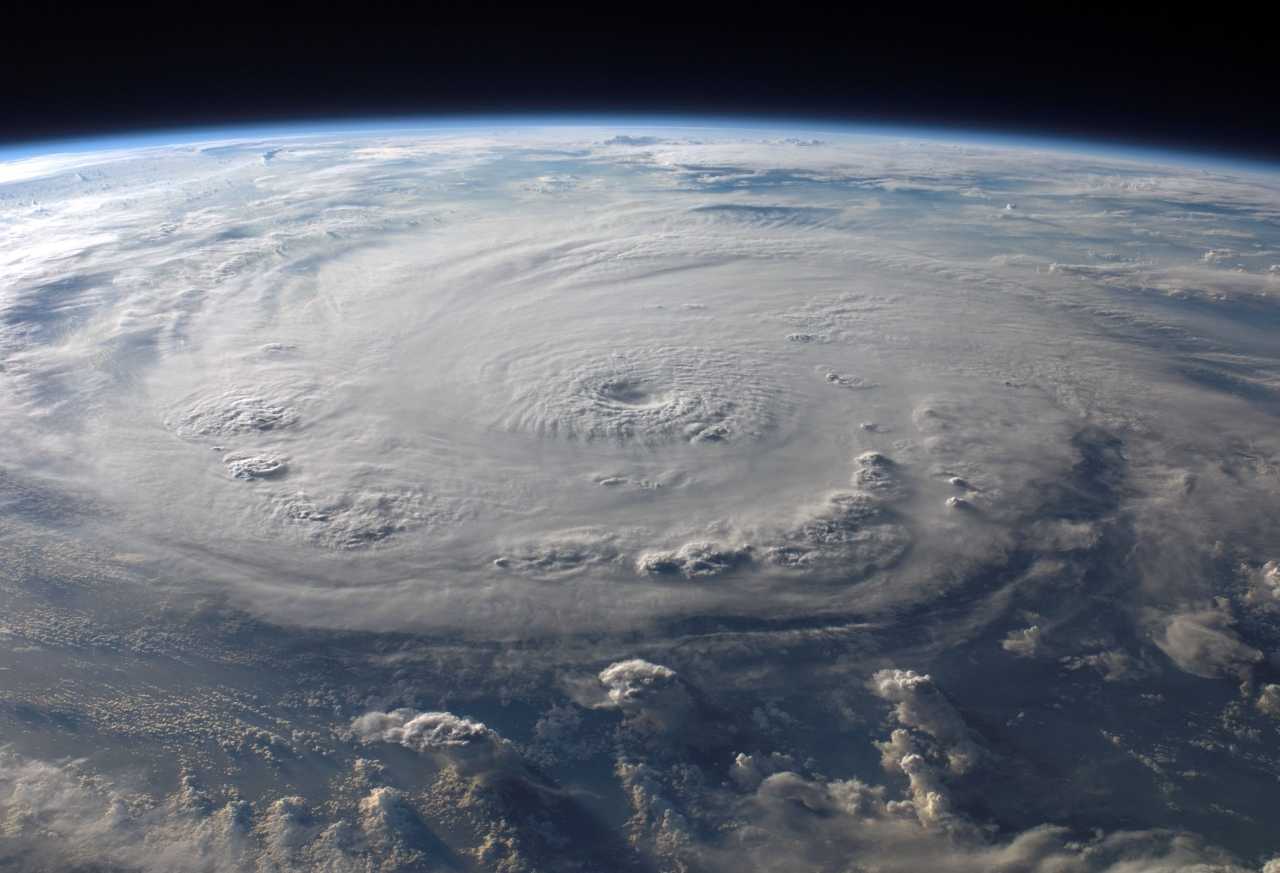
For those who have suffered damage in a natural disaster, this type of article has real meaning. The consequences of the event are one thing. The aftermath and clean up another. The incurance fights another. And then in the end, the fight with the IRS. Since we are in Houston, we experienced and saw a lot of this during Hurricane Harvey in Houston. We still have some of those tax cases going now–ten years later.
These tax disputes are about more than house floods or the roof that comes off. They are about more than what happens when the water goes down and the family is left with ruined furniture, electronics, clothes, and everything else they spent years accumulating.
These cases are about the tax return that is filed months later. They are about the casualty loss claim for everything lost. They are about the inventory nobody takes the time to stop and do while they are hauling soaked drywall to the curb. They center on the belongings that were never appraised. They are about the receipts were destroyed in the storm. They are about receipts for the new sofa, the new television, and the new mattress they bought after the storm.
That raises a practical question that comes up after nearly every major storm. Can you use what it cost to replace your belongings to prove the amount of your casualty loss?
The recent Williams v. Commissioner, T.C. Memo. 2026-91, case provides an opportunity to consider this question.
Facts & Procedural History
The taxpayers were married. The taxpayer-wife was an active-duty member of the Air Force and she was stationed in Panama City, Florida. The family lived in a home on the base.
In 2018, Florida was impacted by Hurricane Michael. It was a category 5 storm. It leveled the base that the taxpayer-wife worked for. The family’s home was damaged and was no longer habitable. The taxpayers evacuated and had to find a new residence.
About ten days after the storm, they went back to the house with a FEMA inspector and an insurance adjuster. They took photos of the damage on the first floor. They could not photograph the second floor because it was too dangerous to walk on. They did not have a list of what was destroyed. They had no appraisals.
They filed an insurance claim. They told their insurer they lost about $61,000 of personal property. The insurer paid the policy limit of about $35,000 and $10,000 under a separate policy rider for jewelry and watches. The adjuster stopped counting items after a few rooms because the policy limit had already been reached.
On their 2018 tax return, the taxpayers claimed a casualty loss of ~$182,000 for furniture, electronics, appliances, clothes, and similar items. After the statutory reductions, the deduction came to about $162,000. The number was based on their memories of what they owned and the few documents they had.
As it does with most large losses reported on tax returns, the IRS pulled the return for audit. The audit resulted in a disallowance of the entire casualty loss, along with several other items, and accuracy-related penalties. The IRS then issued a notice of deficiency. The taxpayers petitioned the U.S. Tax Court to contest the determination.
What Is a Casualty Loss Deduction?
Section 165 of the tax code allows a deduction for losses that are not compensated by insurance or otherwise. The rules for this deduction have changed over time–with the most recent changes being part of the TCJA in 2017.
Now, for individuals, losses to personal property (property not used in a business or held for investment) are only deductible if they come from “fire, storm, shipwreck, or other casualty,” or from theft for a federal disaster.
A hurricane is a casualty and this one was a federal disaster. That part is not controversial. The courts have long held that physical damage caused by a hurricane falls squarely within the statute. In this case, the IRS agent’s report said the taxpayers had not shown that a casualty occurred at all. The court brushed that aside in a footnote. It was undisputed that the storm hit the base and the taxpayers’ home and was a federal disaster.
The deduction is also limited in several ways. Each casualty is reduced by $100. The total net casualty loss is then deductible only to the extent it exceeds 10 percent of the taxpayer’s adjusted gross income.
As relevant here, tthe loss must be also reduced by any insurance or other reimbursement. If the insurer paid you for the sofa, you cannot also deduct the sofa. And if the loss was covered by insurance, the tax code only lets you count it if you filed a timely insurance claim.
How Is the Amount of the Loss Measured?
This is where most casualty loss cases are won or lost.
Under the regulations, the amount of the loss is the lesser of two numbers. The first is the drop in fair market value of the property caused by the casualty. That is the value right before the storm minus the value right after. This is the same measure for damages to property under Texas state law too.
The second is the taxpayer’s adjusted basis in the property. This is usually the amount the taxpayer paid for the property.
So the taxpayer has to prove two things for each item. What was it worth right before the storm and right after the storm? And what did you pay for it? The deduction is the smaller of the two. Then you subtract insurance.
The regulations say fair market value before and after the casualty should generally be determined by a “competent appraisal.” That is easy to say. Just get an appraisal. But nobody appraises their couch. And after a hurricane, the couch is usually on a curb somewhere or in a landfill or maybe even floating somewhere on the other side of the neighborhood in a ditch.
We have written before about how an appraisal is not always needed for a casualty loss deduction. In many cases the courts have recognized this difficulty. They have not treated an appraisal as an absolute requirement. The courts generally look at the documents and testimony the taxpayer offers. If that evidence is specific enough, the court can find a value without an appraisal. But the evidence still has to connect specific items to specific values.
Why Isn’t the Cost of Replacement Items Enough?
The taxpayers in this case did not have an appraisal. They did have photos of the first floor and receipts for replacement items they bought after the storm.
The court was not persuaded. It said that the cost of a replacement item is not indicative of the value of the original item.
That makes sense when you think about it. Say you bought a sofa for $2,000 eight years ago. It was worn, the cushions were flat, and the dog had chewed one arm. A new sofa today costs $4,000. The new sofa’s price tells you almost nothing about what the old one was worth the day before the storm. It might have been worth a few hundred dollars. The casualty loss is measured by what you lost, not by what it costs to start over.
The court also noted that some of the replacement receipts appeared to be for items the insurer had already paid for. One receipt was for sofas and an ottoman. The insurer’s claim letter showed it had already paid for the living room furniture, including a sofa. As noted above, a loss that has been reimbursed by insurance is not deductible. So those receipts did not help the taxpayers at all. If anything, they suggested the claimed loss was overstated.
And then there was the gap between the insurance claim and the tax return. The taxpayers told their insurer they lost about $61,000. They told the IRS they lost about $182,000. They did not explain the difference. There may have been a good explanation. The adjuster only looked at a few rooms before hitting the policy limit, and the second floor was never documented. But the taxpayers did not make that case with evidence. According to the court, they did not give specific testimony about what items were destroyed, what those items were worth, and which ones were not covered by insurance.
That was enough. The court held the taxpayers had not substantiated any part of the casualty loss. The entire deduction was disallowed. The accuracy-related penalty was upheld.
This is a harsh result. Nobody disputed that a category 5 hurricane destroyed this family’s home. The court’s own findings describe photos showing extensive damage to the home and its contents. The family clearly lost more than the insurance paid. But because nothing tied specific items to specific values, the court allowed nothing.
Is There a Better Way to Use Replacement Cost?
But can replacement cost be relevant and used to value personal belongings lost in a federally declared disaster? The answer is, yes. There is even an IRS-approved way to do it.
Before getting into that, we also note that an adjuster would generally start with replacement cost, apply depreciation, and location factors, to determine the value. This is the right answer for most large losses. Get an appraiser to come out. If they cannot be found in time, take pictures and videos and have the appraiser work off of those. The cost for the appraisal is small in comparison to the tax penalties–as this case shows.
But back to the IRS method. In Rev. Proc. 2018-08, the IRS created several safe harbor methods for measuring casualty losses. One of them is the “replacement cost safe harbor” for personal belongings lost in a federally declared disaster. Under this method, you start with the current cost to replace the item with a new one. Then you reduce that cost by 10 percent for each year you owned the item. An item owned one year is valued at 90 percent of replacement cost. An item owned nine years or more is valued at 10 percent.
The revenue procedure gives its own example. A couch bought four years before a hurricane for $700 would cost $1,000 to replace. Under the safe harbor, its value before the storm is 60 percent of $1,000, or $600. Since $600 is less than the $700 basis, the loss is $600, less any insurance.
If you use the safe harbor correctly, the IRS has said it will not challenge your determination of the decrease in fair market value. That is a big deal after a disaster.
But the safe harbor has rules. It has to be applied to all personal belongings claimed for the disaster. There are only a few exceptions. It does not apply to vehicles, boats, trailers, antiques, or other items that hold or increase their value. And it still works item by item. You still need a list of what was lost, what it costs to replace each item, how long you owned it, what you paid, and what insurance covered.
The opinion does not say whether the taxpayers tried to use the safe harbor. Nothing in the opinion suggests they did. The court simply noted that replacement receipts do not show the value of the original items. That is true under the general rule. It is a different story when the safe harbor is properly applied. The difference between a full disallowance and a substantial deduction may have come down to a spreadsheet.
It is also worth noting that jewelry, collectibles, and similar items that hold their value are carved out of the safe harbor. The taxpayers here testified about artifacts and jewelry they had collected while stationed overseas. Those items would have needed some other proof of value regardless of which method they used.
The Takeaway
The casualty loss deduction exists to help people who lose property to storms, fires, and other disasters. The deduction is only as good as the proof you have for it. The IRS might not accept a number based on memory. This case shows that the court might not either. This case shows that receipts for replacement items, by themselves, do not prove what the destroyed items were worth. If you lose property in a federally declared disaster, hire an appraiser to document the loss. If not, build an item-by-item list as soon as you can. Record what each item was, when you bought it, what you paid, what it would cost to replace, and what insurance paid. Then consider whether the replacement cost safe harbor fits. That list is often the difference between a deduction and a disallowance.

Watch Our Free On-Demand Webinar
In 40 minutes, we'll teach you how to survive an IRS audit.
We'll explain how the IRS conducts audits and how to manage and close the audit.